Everywhere they go—to Australia, New Zealand, Hawai’i— the mainland United States, Canada, Europe, and elsewhere, they dig roots into new resource areas, securing employment and family property overseas, expanding kinship networks through which they circulate themselves, their relatives, their material goods, and their stories all across their ocean, and the ocean is theirs because it has always been their home
(Hau’ofa 1994, 155).
In the South Pacific region, mobility is undoubtedly one of the most striking phenomena that has shaped its communities’ social lives over the past few decades (Hau’ofa 1994; Clifford 1997; Thomas 2010; Craney 2019; Trémon 2009). During the 1960s and 1970s, Pacific Island communities experienced significant mobility, not only within the Oceanic region but also towards their respective colonial “homelands”. By the late 1960s, one such example is how France became a transit point for a generation of young Kanak individuals who, after spending time in the mainland for their studies, returned to Kanaky–New Caledonia and initiated the political movement for emancipating the indigenous population (Chappell 2013). While transnational mobility’s crucial role in shaping a generation of Kanak political leaders is well documented (Wittersheim 1999), their ties to local political movements in the mainland remain less explored. As this article will demonstrate, their path through France left a mark that is currently being rediscovered, appreciated, and reappropriated by a current generation engaged in the decolonisation process, as they retrace their predecessors’ footsteps.
I believe, as Aleida Assmann pointed out, that in a world shaped by migratory flows and the lasting impact of colonial histories and interconnected pasts, transcending regional and national borders encourages new perspectives to form about belonging and cultural identity (Assmann 2014). I will explore this idea by looking at Kanak mobility, showing how, by being rooted in deep bonds of solidarity, it fosters a decolonial cosmopolitanism.1 With this concept, I refer to the possibility of questioning the conventional centre–periphery dynamic inherent in colonial relations, by favouring forms of rootedness in the former colonial mainland and reactivating layered territorial memories. While Kanak mobility has been shaped by colonial legacies that have made it very difficult for young Kanak to access education (Salaün 2013)—forcing them to migrate to mainland France with significant hardship (Pafumi 2020)—engaging in artistic creation allows them to overcome this marginalisation and isolation. Indeed, by organising public events, festivals, and artistic residencies in public spaces, young Kanak people have dug roots in mainland France and built solidarity connections with local communities that challenged the colonisation process centred around land dispossession and resettlement. By exploring Kanak youth’s current artistic endeavours in France and their transnational mobility, within this text, I propose a better understanding of their efforts to create bonds and connections far beyond the Pacific Ocean.
This article is based on multi-site and multimedia ethnographic research conducted in mainland France, including some online data, between 2018 and 2022, spanning over the time between Kanaky–New Caledonia’s first and third self-determination referendums. In this politically charged time, young New Caledonians, who were temporarily estranged from their archipelago—because of their studies or due to external circumstances relative to the COVID-19 pandemic— organised various events that, through virtual platforms, artistic performances, and art-based didactic approaches, helped revive and reconnect with memories related to diverse spaces, constituting some kind of transnational memories.
The people interviewed for this article, as well as the protagonists of the ethnography, are between 22 and 40 years old and define themselves as belonging to the category of “youth”. It should be noted that in Kanaky–New Caledonia, the jeunesse—youth—is both an emic and an etic category that refers to an age group within broad boundaries. For instance, the term jeunesse is often used by local media to refer to an age group that can range from 14 to 35 years old, typically connected with specific social and racial characteristics, such as male and Kanak, and usually associated with being deviant (Miceli 2024). Even within the Kanak context, the category of jeunesse has broad and flexible boundaries. Formal rites of passage have largely disappeared—with some exceptions—, and the boundary between youth and adulthood is socially negotiated through milestones such as traditional marriage, stable employment, or the legitimacy to speak in public events (Gallo 2022). As a result, the condition of “being young” can extend well beyond the age of forty.
During the period of this research, I attended online meetings and participated in various artistic projects. Moreover, I was actively involved as a board member in the actions of a collective of young students and artists known as “Festin Comm’un” (Shared Feast), which organised an artistic festival in September 2021. This festival was the culmination of an artistic, political, and militant journey throughout mainland France. The work of the collective gave the opportunity to rediscover what traces were left by more than half a century of Kanak mobility in the country, while simultaneously forging new connections with the mainland political landscape, primarily through public art events.
For these young Kanak, organising public art events was a way of staying engaged with current political events, maintaining connections, and acting, however far from Kanaky– New Caledonia2 they might be. While public debate around the decolonial process intensified in the archipelago, young people in mainland French were fostering a shared space to think about possible paths for their future country. These initiatives, that took place in public spaces, provided young individuals with the opportunity to engage with other places of resistance, which stood in opposition to or in negotiation with the French state—such as a militant occupation Zone to Defend (ZAD, zone à défendre) situated in the west of the country, a rural community of political and eco-activists in Tarnac, and the Basque Country where the artistic residencies took place. It also allowed them to reconnect with and evoke the memories of previous Kanak generations’ experiences on French soil. The decision to hold the festival on the Larzac plateau was also extremely symbolic for that reason. The site is well known in France for its association with the non-violent ecological movement and its support for the Kanak anti-colonial struggle since the 1970s.
The article is structured around four parts. In the first part, I will present how young Kanak individuals in mainland France experienced the referendum period (2018–2022) and show the artistic-political actions they engaged in. I will highlight their social and cultural marginalisation, as well as their desire to overcome this condition through creating new spaces for expression and political engagement. In the second part, I will enlighten the work carried out by the Festin Comm’un youth collective, the artistic residencies they organised, and the places they traversed. In doing so, I will emphasise the continuity of solidarity ties between the Kanak movement and local communities in France. In the third part, I will focus on the festival in Larzac showing the way it was prepared and brought to fruition, examining interconnections between the political and artistic spheres. This will allow me to show how, within a context of political changes, this Kanak generation is establishing new ways to engage politically through the organisation of artistic events—where relationships and networks are built. In the fourth part, I will engage more broadly with Epeli Hau’ofa’s concept of “world enlargement” (Hau’ofa 1994) to argue that the mobility of young Kanak individuals not only extends their sense of belonging beyond national borders—fostering transnational forms of identity and generating new relational networks—but also facilitates a rearticulation and lived reengagement with the traces of their historical past in mainland France.
Gathering to “Speak Up”: The Politicisation of Kanak Students in Mainland France During the Referendum Period
Culture is like a melody; it needs to be shared, taught to our children, so that they can spread it further and make it resonate worldwide
(Opening speech for Kaneka Concert, Rennes, 2021).
Since 2018, Kanaky–New Caledonia has entered a historic new phase. The Kanak people, the indigenous inhabitants, along with the diverse communities that have gradually settled in the territory3, have been called to decide on the future of the archipelago through a series of self-determination referendums. This pivotal moment was the outcome of nearly three decades of political negotiations and efforts to shape a shared destiny (Faugère and Merle 2010). In 1988, following a decade of civil unrest between pro-independence groups and colonial settlers backed by the French state, Kanaky–New Caledonia’s population reached a historic agreement, signed at Matignon, the official residence of the French Prime Minister in Paris. The Matignon Accord marked a turning point, as it officially acknowledged— enshrining it in the French Constitution—the violence of colonial rule and the existence of an indigenous people who had suffered from it. Moreover, the agreement established that Kanaky–New Caledonia was a territory, in which the state would guarantee an “irreversible process of decolonisation”. A decade later, in 1998, the French government and Kanaky– New Caledonia’s communities reached an agreement outlining concrete steps to guide this transition. Setting up local institutions that now administer the island under a semi-autonomous status was central to the accord. However, the key element was a series of referendums: three votes scheduled between 2018 and 2022. Pro-independence supporters only needed to win one referendum out of the three to secure the island’s independence, whereas if all three referendums were rejected, the parties would reconvene to determine the next course of action.
For these reasons, the referendum period from November 2018 to December 2022 was particularly challenging for Kanaky–New Caledonia and especially for young Kanak. It created a generation of people born under the Accord and raised with an expectation, a way to take an active role in the history of the archipelago, and the vote represented an act of political engagement and responsibility. During this period marked by political tension, I could only observe events happening on the archipelago from afar. Being in mainland France, I built connections with a group of young Kanak activists and students based in different French regions instead. These young individuals, benefiting from targeted mobility programs, were temporarily based in the mainland to pursue training and advanced education unavailable in Kanaky–New Caledonia4: Nevertheless, the formative opportunities, the majority of them expressed a clear intention to return to Kanaky–New Caledonia with the aim of occupying strategic and highly skilled professional roles once back in their home country. During the referendum period, the network of associations of New Caledonians residing in mainland France was very active and facilitated the creation of alternative social spaces where they could gather and discuss the future of the country together. As part of broader efforts to raise awareness among the French population about the situation unfolding in the archipelago, these associations forged connections with other activists and collectives engaged in supporting the Kanak cause. As will be explored in the following sections, it was precisely these bonds with local political movements that facilitated the organisation of artistic residencies and the festival.
The first time I met some of the members of these associations was during the first self-determination referendum held on 4 November 2018, at a private event organised at the historic residence of the Leenhardt family, not far from Paris5. I had been invited to the event by a Kanak friend I had met in 2016 during my PhD ethnographic research in Kanaky–New Caledonia. My friend had moved to France around that time to continue his studies. At the event, there were around fifty Kanak people, mostly young members, who had come from all over France with the help of the network of local associations scattered throughout the country. The event was the result of a chance encounter between a young Kanak studying in France and Jeanne Leenhardt, the elderly granddaughter of the renowned missionary, on a train journey near Paris. That encounter allowed for the renewal of an old connection and the event that followed not only aimed to celebrate the memory and the historic legacy of Maurice Leenhardt but also provided a place for solidarity by welcoming the community to follow the referendum results from a distance.
For two days, on 3 and 4 November 2018, the Leenhardt residence was transformed into a place of transnational and trans-generational memory, where young people could recall a part of the archipelago’s history through a small private exhibition of objects belonging to the family, on display for the occasion, and by retracing the still vivid memory passed down from generations to the descendants of the Leenhardt family. This event provided a framework for young students to follow the referendum ballot count live. In fact, for young Kanaky–New Caledonians, whether they were in favour of or against independence, following the independence referendum together in the mainland France was a deep emotional experience. This event offered a space for political discussion, a way to exchange information and, at the same time, it was also a place to experience that pivotal moment together, despite being far from home. Camped out in the house’s common room, they silently watched the progression of the results projected onto the wall throughout the night. In the end, 56.7% of Kanaky–New Caledonians opted for the territory to remain within the Republic of France, while 43.3% chose independence6. The next morning, when the results were clear, they gathered for a thoughtful and emotional discussion, where participants shared their feelings about this significant historical milestone and articulated their hopes and visions for the future. For many young participants, it was the first time they expressed their political views publicly.
The second referendum, which took place on 4 October 2020, yielded the same outcome as the first, but the difference in votes in favour and against independence decreased significantly, with 53.24% in favour of remaining in the French Republic and 46.74% supporting independence. The two referendum votes were marked by an unprecedented turnout from Kanak communities, a sign of active engagement in the decolonisation process set up in the 1980s and 1990s. These results both raised hopes and tensions, further polarising public discourse in Kanaky–New Caledonia and clearly dividing the population. Among the young people residing in mainland France, while many supported independence, others remained uncertain or against it. Being able to express themselves in public and engage in a dialogue, while also reflecting on possible future trajectories, was a challenging exercise, especially as it was not mediated by the adults’ authority, as was often the case in the archipelago.
During this period of significant uncertainty about the country’s future, the topic of “youth in crisis” was frequently brought up in local media. It was mostly addressed as an issue about shaping the discourse on the nation’s prospects. Within these discourses, Kanak youth ( jeunesse kanak)—a social category often extending beyond mere age—was depicted both as the source (or outcome) of the country’s current challenges and, at the same time, as the key to overcoming this period of uncertainty. However, despite the centrality of “youth” in public discourses, young voices were hardly heard in public debates. This may be due to the social marginalisation of Kanak youth, especially in urban areas (Cugola 2021; LeFevre 2013), but also for reasons that could be considered more “cultural”. In the Kanak context, speech is often deeply connected to both power and age. The right to speak in certain official public settings and on specific topics, such as “tradition” and politics, is typically reserved for adults and elders—mainly men (Gallo 2021; 2022). As a result, in Kanaky–New Caledonia, there are usually adults who speak in public, while young people rarely have the opportunity to express themselves freely. This social and cultural marginalisation impacts both the public sphere and everyday life, making it difficult for younger generations to assert themselves and find their voice. Nevertheless, as I noticed during my research, young people did manage to carve out spaces for self-expression and engagement through community organisations, artistic and cultural productions, and educational opportunities outside Kanaky–New Caledonia. Music, dance, and urban art are just some examples of platforms for young people to express themselves while actively participating in shaping the future. Moving to mainland France, though often accompanied by the emotional strain of being far from home—an issue exacerbated by the political crisis and financial hardship, or even impossibility, of travelling between France and Kanaky–New Caledonia—could then provide a crucial moment for self-reflection, open discussion, and encourage expression of ideas about the present and the future.
During the referendum period, the need to create spaces for self-expression, partially facilitated by artistic practices, inspired several young Kanaky–New Caledonians to come together to “Speak Up” (Libérer la parole) —freeing one’s voice to express oneself7. This became the slogan of a collective comprised of Kanaky–New Caledonians and their supporters living in mainland France, founded in October 2020 after the second referendum, called Festin Comm’un. The goal of this collective was to foster national reflection through art and culture while promoting a better understanding of the political, cultural, economic, and environmental issues facing Kanaky–New Caledonia.
Artistic Residencies as a Means of Interweaving Old and New Ties of Solidarity
We want to assert the Kanak presence in France. However, we recognise that we cannot achieve this without your support. As we are not native to this land, it is essential for us to collaborate with the local community
(Young Kanak statement, Basque Country residency, June 2021).
The COVID-19 pandemic outbreak in April 2020 further restricted mobility and left numerous overseas young people stranded in mainland France. Geographically and socially isolated, without being able to actively participate in the country’s political debate, young people sought refuge in networks of associations as a way to discuss current events, engage in dialogue, and collectively follow some of the key developments unfolding in the archipelago. In fact, the pandemic did not stop history from moving forward, nor did it prevent the third referendum from taking place, despite the pro-independence supporters’ request to postpone the vote by at least six months. Their aim was to ensure a proper burial for the dozens of Kanak people who had died due to the pandemic, following the complex traditional mourning ceremonies, and to have the time needed to reorganise their door-to-door political campaign (Trépied 2021). Despite appeals from the UN, the Protestant Church, and the scientific community, the vote took place as scheduled on 12 December 2021, amid a call to boycott from pro-independence supporters. With 57% abstention (compared to less than 20% in previous referendums), the “No” camp won with 96.50% of the ballots (Kowasch et al. 2022). During this intense period, the virtual realm became the primary space for socialising and discussion. “Laka’z en live”, a virtual platform managed by a group of young Kanak individuals to organise virtual meetings and discussions, was born from this context.
Between 2020 and 2021, “Laka’z en live”—in partnership with the Festin Comm’un collective—organised several online events centred around the celebration and remembrance of important and tragic moments in Kanaky–New Caledonia’s colonial history. For example, the first online event was the commemoration of the Ouvéa cave massacre. On 5 May 1988, 130 special forces soldiers from the French army launched an assault on the Gossanah cave, where Kanak militants had been holding French military police (gendarmes) hostage, resulting in a massacre: nineteen Kanak and two gendarmes lost their lives during the operation (Plenel and Rollant 1988). Evoking the memory of these events through the re-enactment of archives and with the words of artists and descendants of the families involved, brought insight for thought on the present and future trajectories of Kanaky–New Caledonia, while also maintaining strong connections at a time when social interaction was minimal.
These virtual events sparked the concrete idea of organising a large-scale artistic and political festival in mainland France the following year. The event would take its inspiration from Melanesia 2000, a festival held in Nouméa in 1975 which played a pivotal role in the political awakening of the Kanak people by celebrating art and performance (Tjibaou et al. 1976). To bring the festival to fruition, the Festin Comm’un collective planned on organising several intermediate events to prepare and inform the public. These events’ goal was to forge new connections with local communities engaged in various struggles and to reinforce existing bonds that echoed the journey of the Kanak people in France.
One of the initial milestones in the journey was a public gathering held in Paris in the Bois de Vincennes, to unite various associative groups across mainland France during the referendum period. The selection of the venue was deliberate; the park is indeed located near the Palais de la Porte Dorée, the National Museum of Immigration History, formerly known as the Museum of the Colonies. This palace, built for the International Colonial Exhibition of Paris in 1931, infamously exhibited indigenous peoples as if they were zoo animals. On 8 May 2021, around a hundred young individuals from the Francophone Pacific region congregated on the nearby lawn, brought together by networks of student associations. Throughout a day of festivities, they collectively pondered the future of the archipelago. Diverse political perspectives emerged, facilitated by artists and social workers through playful activities and performances, culminating in a large dance that included all the participants. During this energetic performance, one organiser, indicating the nearby museum, stated: “Let’s shake the earth to remind them that we are still here and alive!”—despite the fact that colonisation was one of the main causes of the drastic decline in the indigenous population of the South Pacific Ocean (Sand 2023). The performance and songs served as platforms for the youth to reclaim public space while conveying crucial political messages and shedding light on Kanaky–New Caledonia’s socio-political landscape. In addition to promotional events, the Kanak collective organised three major artistic residencies in places of resistance and criticism of the French State, advocating for alternative forms of management and the protection of their spaces and culture.
The first residency took place from 26 to 28 February 2021 at the Zone to Defend (ZAD, Zone à défendre) of Notre-Dame-Des-Landes. The ZAD refers to a space of 4 000 acres of wetlands near Nantes, illegally occupied in 2009 by environmental activists, farmers, and opponents of the planned construction of a new airport. After years of clashes with authorities, the French government abandoned the airport project in 2018 and since then the ZAD has become a symbol of ecological resistance in France (Bulle 2019). Within some occupations and self-management activities that continue in the area up to nowadays, and the Zad is still considered a hub for political activism, ecological engagement, and artistic expression (Fremeaux and Jordan 2021).
The theme for discussion chosen for the residency was the struggle of women in patriarchal society, an important issue in Kanaky–New Caledonia where domestic violence rates are high (Duong-Pedica, Pelage, and Wané 2021). Young Kanak women shared their testimonies and exchanged reflections and viewpoints with feminist activists from the ZAD. In addition to these discussions, the residencies were spaces for artistic exchanges that facilitated the co-creation of various collective works, like an original musical composition, recorded by a Kanak artist with the participation of several local musicians. Such outcomes were intended to be showcased and performed during the final festival.
The second residency occurred from 25 to 27 June 2021 in a village near Bayonne, in the French Basque Country. This encounter with Basque activists and musicians, engaged in the preservation of their culture and language, focused on indigenous rights. Together with young Basque artists, the Kanak collective discussed cultural policies, legacy, and transmission. Discussions focused on comparing educational policies between the Basque Country and Kanaky–New Caledonia, as well as on language promotion policies, cuisine, and cultural sovereignty.
Lastly, from 2 to 4 July 2021 the collective organised a residency centred on children and education at the agricultural community of Tarnac in France, an anti-capitalistic location that advocates for ecology. It is here where, in October 2020, during a meeting in support of the second referendum, the Festin Comm’un collective was officially created.
These two to three-day residencies were structured around discussions and knowledge-exchange, providing young Kanak individuals with a platform to share their personal experiences and engage in the debate on the future of the archipelago. There are at least two key aspects connecting the collective of young New Caledonians to the social and political contexts they engage with in mainland France that are important to note: first, there is the idea of considering art as a form of resistance and political expression, that Monika Salzbrunn has analysed as “artivism” (Salzbrunn 2019). Second, ecology is seen as a space for activism and, at the same time, a means of establishing roots and showing respect for the land. These gatherings offered alternative spaces that encouraged thought on challenging topics and on issues that weren’t easily or openly addressed in the archipelago, particularly by the youth. Through artistic expression, these events fostered political engagement and encouraged discussions and expression. Furthermore, these gatherings served as opportunities to learn about paths of resistance and struggle taken by local communities in France, challenging the perception of the state as a uniform and unyielding entity and fostering spaces for dissent and change.
Making Politics Through Art: The Festival of Larzac
The festival was conceived by the collective as a cultural, artistic, and political event to help both New Caledonians and the French to understand the political stakes surrounding the referendums and the Nouméa and Matignon-Oudinot Agreements. This choice reflected the collective’s decision not to officially take a political stance on the referendum, in order to foster an open dialogue with the entire New Caledonian community in mainland France. Choosing Larzac as the location of the festival in such a politically charged atmosphere was a difficult decision, and this choice gave rise to disagreements and initial negotiations. This can be understood by briefly outlining the particular history of the location and its connections with Kanaky–New Caledonia.
In the 1970s, the Larzac plateau—an agricultural area in southern France known for Roquefort cheese production—was the stage for extensive protests against the expansion of a military base. The project’s abandonment in 1981 transformed the non-violent local protests on the Larzac plateau into a global model of anti-capitalist, anti-imperialist, and anti-colonial struggle. Since then, Larzac has become a hub for a “return of solidarity” and a site of transnational activism (Gildea and Topkins 2015). As a supporter of movements fighting against the brutality of colonial states, Larzac attracted the interest of Kanak Jean-Marie Tjibaou, who was advocating for independence at that time (Tjibaou 1996). Consequently, the Kanak leader made multiple visits to Larzac, creating strong ties with the farmers families. In 1988, as a gesture of solidarity with the Kanak and Socialist National Liberation Front (FLNKS), during a ceremony the Larzac community donated a portion of their land to the Kanak people. The bond with Larzac stayed strong even after Tjibaou’s death, and up to nowadays the plateau has remained an emblem of anti-colonial solidarity and a site of transnational memory for the Kanak people to the point of becoming a pilgrimage site for many Kanak passing through mainland France.
For these reasons, Festin Comm’un’s decision to organise a festival on the Larzac plateau without openly taking a stance in favour of independence raised concerns among some political representatives of the FLNKS, especially in Kanaky–New Caledonia, where public discourse was highly polarised. Although the project received immediate support from artists and musicians in both France and the archipelago, not openly aligning with either side of the independence debate was seen by some politicians and activists as ambiguous and, in some cases, as disrespectful towards the authority of adults and the established historical narratives connected to the land. Even within the Larzac farmers’ movement, there were initial reservations, particularly among some first-generation activists who adhered to the FLNKS’ political stance closely, with whom they had collaborated four decades earlier. As organisers explained, certain political activists from Larzac criticised the younger generation for “not being aligned with their elders”, suggesting they issue a “press release in favour of voting for independence” in exchange for their support. By maintaining a nonpartisan stance, the collective faced the risk of having to abandon plans to host the festival on the Larzac land as their positioning was not appreciated by many. Some old farmers perceived the choice to hold the festival on the Larzac plateau as an attempt to alter the place’s memory, historically associated with Kanak independence movements. Subsequently, the opposition from certain Larzac activists led multiple venues to refuse to host the festival, risking jeopardising the festival’s existence.
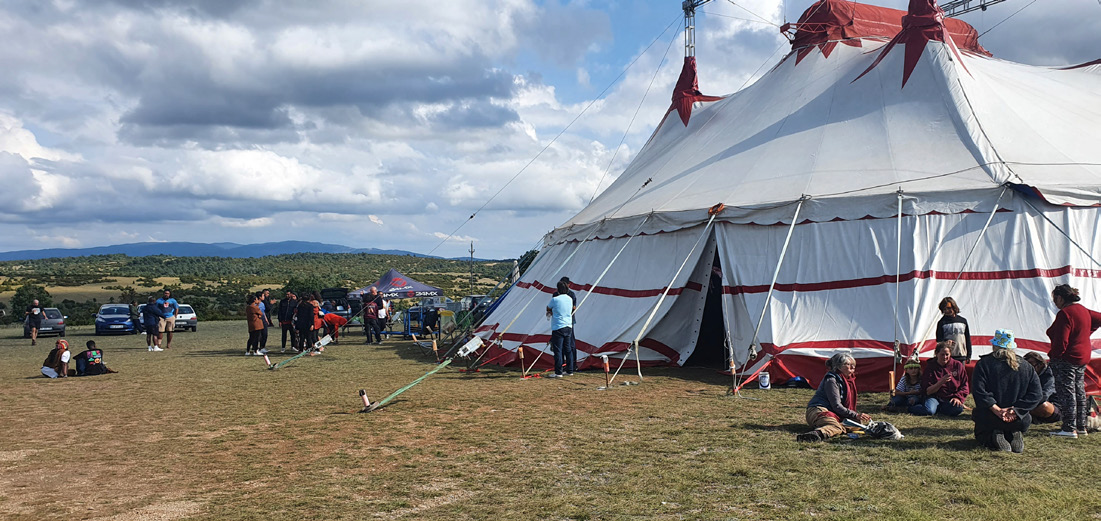
FIGURE 1:: Circus tent and gazebos on the festival site, the Larzac plateau, 23 September 2021. © Matteo Gallo.
However, the project finally gained enthusiastic support from a new generation of young activists residing in the area and in favour of the collective’s vision to engage the entire population in dialogue while moving beyond the focus of the imminent referendum towards a discussion of the future in general— particularly at a time when the referendum itself was contributing to division and opposition. After multiple setbacks, two women offered a solution to the collective by proposing to hold the event on agricultural land designated for sheep pastures. On the site, which had no facilities, a generator, a circus tent, an outdoor stage with gazebos, and portable restrooms were set up. There, not far from Montredon village on the Larzac plateau, the festival took place from 24 to 26 September 2021 (Figure 1).
The festival’s opening date, 24 September, holds a symbolic value for the people of Kanaky–New Caledonia. As stated by collective members and mentioned in the Festin Comm’un final report: “This date evokes both conflict and sadness, but also carries a sense of constructive hope”. It is indeed the date when the French army took possession of Kanaky– New Caledonia, in 1853. Since then, the date’s significance has been appropriated by the independence movement, which proclaimed it as the day of “Kanak mourning” in 1974. Choosing to inaugurate the festival on this date therefore played an important role in incorporating decolonisation discourse.
The organisation of the festival followed the customs of traditional Kanak weddings. This involved relying on mutual aid, mobilising family connections to engage as many volunteers as possible, securing landed materials, and requesting donations to ease financial burdens. In the months leading up to the festival, in addition to events organised on the mainland, some referent members of the collective, based in Kanaky–New Caledonia and called “ambassadors”, were tasked with tracing family connections, contacting the clans of the young people involved in the project to request their permission and aid. Support from families was formalised by sending gifts from across the archipelago, collected by “ambassadors” in Nouméa, and subsequently transported to Paris directly in the suitcases of various young people departing for mainland France.8 During the festival’s opening ceremony, these gifts were collected and presented to be offered to the Larzac community hosting the event. The festival’s opening ceremony clearly showed how the location was transformed into a space for transnational connections and memories, as exemplified by the gifts exchanged. Just as in traditional Kanak ceremonies such as weddings, these objects presented together embodied the strength and depth of the bonds the collective has cultivated over time.
In addition to the work of “ambassadors” and the support of various families and clans involved through Kanak kinship relationships, the collective relied on different forms of self-financing, which helped cover a significant portion of the festival’s expenses. An online fundraising campaign; the sale of event merchandise and textiles, such as stickers, magnets, cups, and posters; and other means of fundraising were organised. In addition, several New Caledonian associations contributed by lending equipment and providing volunteers for the project. Aside from the members of the steering committee, various volunteers were recruited using the collective’s Facebook pages, website, and Instagram before the public event.
During the festival, a refreshment stand sold beverages and food stalls based on the idea of pay-what-you-can or associative pricing. The entry fee was set at the affordable price of 10 euros per day. A final part of the budget was covered by different grants from public and private entities in France and Kanaky–New Caledonia.
A letter written by members of the collective to incite participation and engage artists succeeded in bringing together several Pacific islanders who participated in the event voluntarily and received expense reimbursement and modest compensation for their participation. In this way, many artists from the Pacific region living in mainland France answered the call: Musicians, technicians, performers, and actors became part of the festival team and also volunteered by assisting with security, cleaning, and cooking. Engaging with alternative economic circuits and forms of exchange and solidarity, allowed the collective to move beyond the mainstream economy and, in doing so, to challenge the dominant capitalist system.
Conferences, round table, concerts, and performances took place during the festival. The majority of festival participants were Kanak, New Caledonians, and other members of Pacific Island communities from all over France. There were also Larzac farmers and activists from the three artistic residencies that preceded the festival. Throughout the day, numerous debate spaces were held, often mediated using performances, in the form of a “moving debate”, a playful enactment where participants were asked to take a stance on general questions posed by the organisers by changing where they stood. This method, which some members of the collective learned during their training as social worker in France, helped more hesitant participants get involved in discussing topics such as climate, resource exploitation, art as a political tool, non-violent struggles, feminism, ecology, and sovereignty. As night descended, the stage came alive with performances by diverse Kanak groups, showcasing traditional and experimental dance forms, miming, and music groups. The stage featured performances by artists including a group of young Kanak musicians trained in France who performed covers of iconic Kaneka songs—a music genre originating in Kanaky–New Caledonia in the 1980s, which supported the Kanak political awakening (Gallo 2024). The lineup also included a Ni-Vanuatu musician, widely known across the archipelago for a song that became a hit on social media during the pandemic period, as well as a traditional Kanak dance group formed by members of an association based in the south of France that is actively engaged in passing down Kanak cultural heritage to younger generations.
Among the performers there was Henri Jaïne9, a multifaceted singer, dancer, slam poet, mime, and storyteller, who was trained at the International School of Dramatic Corporeal Mime in Montreuil, France, originally from the Siloam tribe in Lifou, Kanaky–New Caledonia, and now based in Toulouse. Since 2014, Jaïne has been engaged in an artistic exploration that blends Kanak traditions with international influences from around the world, including miming, rap and electronic music, singing in Drehu (his mother tongue) and French, encouraging the audience to reflect on the coexistence of ancestral traditions and modernity as well as local and global connections. His iconic character symbolises this fusion, representing the history of his people and humanity. In constant transformation, he embodies the duality of his identity: a Kanak warrior and a citizen of the world at the same time, a character navigating between the past and the future, looking to define his own identity. On stage, he appears with his body half painted black and half covered with interwoven fibres, a reminiscent of traditional Kanak garments, carrying the symbol of Kanak and other communities’ cultures in the archipelago, as well as the violence of their colonial history. The artist views himself as a “bearer of knowledge” who believes that each performance serves as an act of transmission, conveying a message of love and unity (Figure 2).
The event left a lasting impact, culminating in a moving and symbolic announcement during the closing ceremony: the two young farmers hosting the festival declared that the land would henceforth be known as “Kanaky”, to serve in remembrance of the Festin Comm’un event and as a tribute to the ongoing struggle of Kanak people.
A Decolonial Cosmopolitanism
For four days, the festival was the epicentre of transnational connections, shifting the conventional dynamics between centre and periphery to highlight Kanaky–New Caledonia and its history of interactions and connections. The festival marked the culmination of a gradual rediscovery of the Kanak presence in mainland France that began with the relationships forged by the first generation of young Kanak students with the mainland and reached new summits with a transgenerational layering of young Oceanians’ mobility in mainland France.
In his work, “Our Sea of Islands” the anthropologist Epeli Hau’ofa portrays Oceania as a dynamic and expansive realm, far removed from the notions of being small and isolated. He evokes a population in constant motion, capable of digging “roots in new resource areas”, even extending beyond the fluid boundaries of the ocean to continents like America and Europe. Since the Second World War, Pacific Islanders have defied Western stereotypes that depicted them as imprisoned on tiny islands in a faraway sea. Instead, they undertook unprecedented global expansion without losing their connection to the land and their roots (Sahlins 2000, 180). This balance between mobility and roots underscores how these communities’ worldwide migrations foster a sense of “cultural rootedness” (Maurer 2019, 116) while also serving as a mechanism for forging new bonds and pathways for solidarity; a vision that challenge the traditional centre–periphery dynamic of colonisation.
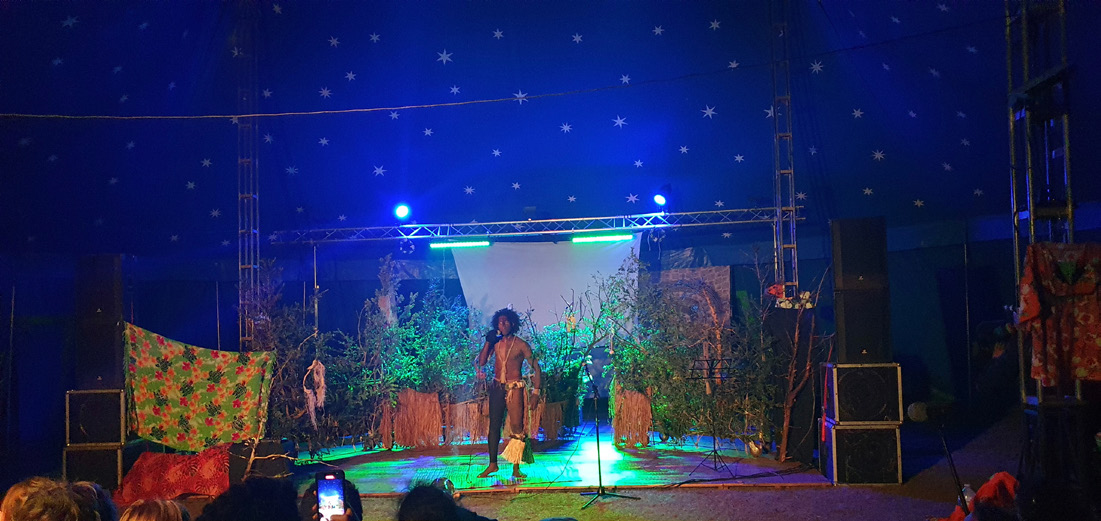
FIGURE 2:: Performance in the circus tent, Larzac, September 2021. © Matteo Gallo.
In a globalised and interconnected world, younger Kanak generations have forged new connections while also reviving and giving significance to the traces of the past, similar to the traditional “customary path” (chemin coutumier), a term that refers to a mode of creating political ties that define Kanak social structures. In this perspective, these connections are considered as gateways and bridges accessible not only to the individuals involved but also to their families and clans, extending across future generations. These connections are passed down and nurtured over time, reinforcing familial and societal links from one generation to the next. While it’s crucial to honour and maintain these connections, they are not meant to confine or restrict social interaction. Instead, they serve as matrices through which the system of ties and connections is reproduced and subsequently expanded. Mobility is a means of strengthening existing ties while perpetuating a legacy of shared experiences and aspirations. The festival held in Larzac in September 2021 celebrated such decolonial cosmopolitanism. Through the collective efforts of various groups mobilised by Festin Comm’un, the Larzac Plateau became a hub for associations, solidarity networks, and the circulation of gifts and knowledge. It served as a transnational space where Kanak and local struggles converged, bound by a shared anti-capitalist and anti-colonial vision. Unfold in public spaces such as the Bois de Vincennes or the Larzac plateau—sites already imbued with political resonance—, these artistic appropriations operate as performative gestures that articulate art, politics, and territorial rootedness, positioning these interventions as acts of resistance within broader critiques of the global, capitalist, and postcolonial order. In this space, art, operating via channels different from those in which traditional political actions occur, brought a community together to unite it around a vision for the future of society. The event provided an opportunity to engage with political issues from afar, bringing people together through an identity-based discourse centred on activating activists’ memories expressed through art.
Conclusions
Throughout this article, I wanted to shed light on the experiences of a group of young Kanak individuals in mainland France and reflect on how transnational mobility can foster dynamics and rooted form of political and cultural engagement. Through artistic expression and strategic occupations of public spaces—from urban parks to rural resistance zones—Kanak youth have created platforms that transcend geographic and colonial boundaries, enabling them to articulate political visions and reclaim agency in the decolonisation process.
The choice to hold artistic events in spaces not traditionally dedicated to art aimed at politicising these spaces through the artistic practice, while simultaneously politicising art by situating it within spaces that are themselves imbued with specific history and memory related to the colonial past (e.g. Bois de Vincennes) or the decolonial process (e.g. Larzac plateau). Art, in this context, became a political act and a means of forging solidarity; festivals, residencies, and performances functioned as vehicles for dialogue, memory transmission, and coalition-building, where public spaces were transformed into arenas of resistance and recognition. To conclude, I believe that these artistic interventions allowed young Kanak to reconnect with past generations and that their work not only honoured ancestral legacies but also opened up new, inclusive pathways for imagining the future of Kanaky– New Caledonia and its global connections.