You lack a foot to travel?
Then journey into yourself
That leads to transformation of dust into pure gold.
(Jalal al-Din Rumi)
Without meaningful transformation from within, there is no transformation. Similarly, a transformative anthropology needs to begin from within. Ever since its emergence around the turn of the twentieth century, and despite its critiques or ambivalences, anthropology remained reined in with external enterprises to do with colonialism, capitalism, expansionism, exploitation, extractivism, institutionalization along with classifications, collections and documentations of the Other. After a spate of challenges from these Others—the formerly colonized, women and other oppressed groups—the tables began to turn bringing with it a certain freedom, on the one hand, and a self-reflexive lens, on the other (Clifford and Marcus 1986). But this freedom was a chequered one as post- or neocolonial avatars cemented themselves, and backlashes began. And the self-reflexive lens continued to skirt around hardened institutional legacies that had accreted in the discipline. A more politicized, action-based and public-facing orientation was needed as Setha M. Low and Sally Engle Merry (2010) summarise with their six-point agenda for engaged anthropology—sharing and support, teaching and public education, social critique, collaboration, advocacy and activism. However, their suggestions stop short of engaging inner worlds, fully acknowledging that the distinction between inner and outer can be a dualistic artifice.
What many scholars remain anxious about is a deep decoloniality—a purging from within that can also begin to remove thickened encrustations all around, while tending to, and making amends for violence against the excluded and the exploited (see Kaur and Klinkert 2021). If we do not transform from within, we will continue to retain objectified and propertied notions of the self’s relationship to the world, Weltbeziehungen (Hollstein et al. 2023), which is how the chain-reaction of violences all began culminating in the triple planetary crisis of climate change, pollution and biodiversity loss along with structural inequalities and increasing conflicts as outlined in The Ascona Transformation Charter (ACTRACT, in this volume). To counter these multiple violences with the mobilization of Global South nativist narratives may also come with a mirror-dance of problematic politics to do with objectified identities, differences and hierarchies both between human, and in relation to non-human lifeforms.
Stepping aside from humanism for a moment may offer one path as multi-species anthropology reveals (e. g., Kirksey and Helmreich 2010; Locke and Munster 2015; Fijn and Kavesh 2021). The painting on the right is called “All we ask is to breathe” by Sohana Bains. It is a reminder that virtually all sea turtles are endangered, killed for their meat, skins, shells and eggs. Others drown as they swim, for they become accidental bycatch in trawler nets and cannot come up to breathe. Their eggs are also affected by rising sand temperature that affects their sex ratio. Not only do they suffer from the scourge of human greed, but also as victims to mass-trawling in polluted seas, and casualties of climate change, invariably anthropogenic. Can we begin to see and feel through the body of the sea turtle?
At heart to self and consequently social and planetary transformation is a requisite ego-loss, that might enable viewing the world through other eyes (or senses if they are eye-less). Arvindpal Singh Mandair elaborates, through an exegesis of the opening words in the Adi Granth composed by Guru Nanak (1469–1539), on “a self-enforced withdrawal of ego at the very moment that the self names itself as ‘I’ and thus starts to become an origin or absolute centre in relation to all other existing things including others” (2014, 304). It is only by self-dissolution leading to self-less self-discoveries can we begin to nurture deeper awareness, wisdom and approaches to reconnect with “all other existing things” whether it be the earth, its multifarious lifeforms, and whatever may lie within, on and beyond.
Transformative anthropology is not just about rewinding the path of anthropological ancestors, however critical. It requires undermining their objectivist and rationalist stances premises altogether, ruminating about other pathways, visible or not, in terms of going beyond the immediacy of the material, spatial, temporal, conceptual and/or ontological. It is about taking reflective action, while courageously unfolding synergies with a revitalized relationship to the vulnerabilities of multiple lives and the politico-economic systems that they are ingrained in, all brought together on a weathered planet with “care, respect, collaboration, freedom of expression and diversity as basic principles in our respective institutions and positions” (ACTRACT).
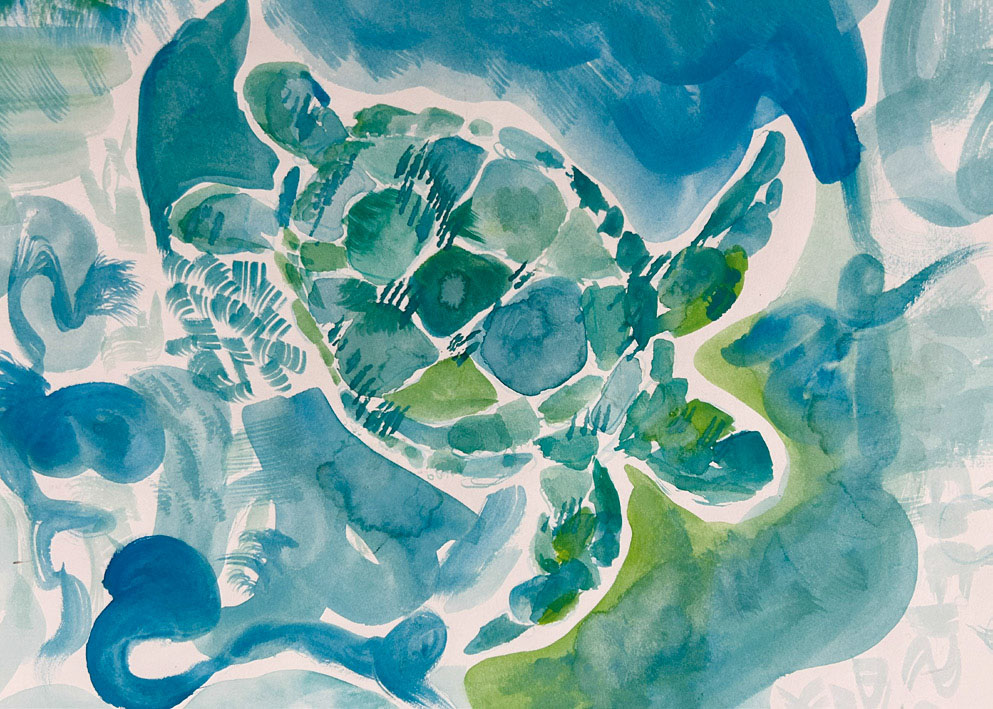
Figure 1:: Sohana Bains, “All we ask is to breathe”, 2024.
Rumination needs to be unmoored from psychological associations (see Nolen-Hoeksema et al. 2008) to return to its etymological bearings of “thinking deeply”. This may entail a deep ethnography that ventures inwards so as it may turn outwards with shifted subjectivities: from Self-Other to selves in others, and others in selves; from classification to collaboration; and from analysis to appreciation where I-dea and I-dentity are put under erasure. This deep ethnography is not a proposal for more psychoanalytical extractivism, self-reflexivity or positionality; rather more imaginative works of joint (self-)discoveries and mutual change and exchange.1 Anthropology as the study of humankind—etymologically, ontologically and epistemologically—needs to be transformed to an anthropoesy, a co-creative conjunction with lifekind. Getting down to practice, it might involve co-creative action research: creating a song, performance, film, artwork or exhibition together;2 dialogic/multilogic co-presentations and protestations, in-person or online; or collaboratively collaging and writing an article, book or coproducing other forms of expression (e. g., Kaur and Eqbal 2018; Bejarano et al. 2019). It may even mean stepping down from authorial roles altogether, so as participants step up as proposed for “fifth cinema” (Kaur and Grassilli 2019). Such praxis can become the basis “ for a shift from an individualistic mindset to collective responsibility, deliberation and action” (ACTRACT).
Anthropoesy is not a prescriptive programme, but a proposal for a processual unfolding with which to navigate the minefield of the mindfield—one that requires a cre-active responsiveness, responsibility and unwavering commitment, while being fully attuned to self, others and the environment. It is a quest for co-breath where our breathing needs to be attuned to other lifeforms. Through the unfolding self comes the transformation, within and without, and this is where the gems of regeneration may lie.
Author
Raminder Kaur is based in the School of Global Studies at the University of Sussex. Her research spans public culture, religion and politics, censorship, race/ethnicity/gender, human rights, environmental issues, energy, and ‘cultures of sustainability’. She is the (co-)author and co-editor of twelve books, the most recent being Kudankulam: The Story of an Indo-Russian Nuclear Power Plant (Oxford University Press, 2020). She is also a scriptwriter, and her theatre productions include those based on collaborative ethnography produced with Sohaya Visions, Mukul and Ghetto Tigers, and Chandica Arts. Raminder has also supported other writers from across the world for script-readings and staged productions including the establishment of RAFTA: Rise Against Fanaticism Through the Arts. www.sohayavisions.com
rk39@sussex.ac.uk
University of Sussex