How to deal with representation in a constantly shifting world while engaging in anthropology as a multimodal practice, from research design to communication? Anthropologists communicate with the academic public and other stakeholders in myriad ways, through writing (academic, journalistic, literary, fiction, poetic), screening (audiovisual, digital), and exhibition (performance, theatre, displaying of objects, exposition in visual and written forms) (Basu 2017). In all these instances of “communicating anthropology,” representation takes place. The construction of the corpus of data and the transformation of data into anthropological products and outcomes are mediated by politics (Vargas-Cetina 2017). Anthropological fieldwork relies on the ethnographer’s first-hand experience, which comprises the point of observation, the setting and context, the positionality of the researcher, and the audience or public that require the anthropologist to make the product understandable within a current cultural, social, and political environment. At the same time, public funding bodies increasingly demand a social impact aspect of research and “engaged” and “public” anthropology gain ground focusing on transformational or advisory goals (Larsen et al. 2022).
Current debates about engaged anthropology, decoloniality, knowledge production, and modes of representation, in addition to the requirements of funding bodies and ethical questions that arise while working with sensitive subjects, generate fundamental questions for anthropologists in training, often destabilizing not only the research projects but the identity of the becoming-anthropologists themselves. The wave of decolonization processes that have overcome fields as varied as culture, art, and science makes us face the ongoing history of the discipline, while trying to become part of its scholarly community. What kind of anthropology do we want to make and be part of? To realize that we are walking on shaky ground while trying to find our way is a profoundly uncomfortable but transformative experience.
To engage with this discomfort, we organized a two-part experimental, student-led workshop that took place in 2020 (online) and 2021 (in person) as part of the CUSO program in anthropology. During this workshop, we wanted to create a safe space where graduate students could ask questions and share experiences in an open and receptive environment. We invited Susan Ossman, Eda Elif Tibet, Nadine Wanono, Monika Salzbrunn, and Esther Leeman, practitioners who are open to these questions, have experimented with different representation methods in their practice, and have carried out research that could widen our horizons and inspire different ways of thinking and working through the problems and challenges we are facing.
This space allowed us to experiment with and explore various techniques such as self-reflection, performance, drawings, and visualization to share our research projects’ ideas, questions and findings. This approach points out performative and alternative narratives of research. Thus, partially responding to Arnd Schneider’s call for “a new engagement with visual forms of research and representation beyond the sub-disciplinary confines of visual anthropology” (2008, 172), this special feature, based on the debates we had during the workshops, addresses critical questions of representation and reflexivity in anthropological research, especially in relation to migration studies.
From distinct perspectives, the four contributing articles discuss how representational issues arise in their respective fields: What and who is represented and how? Based on fieldwork experiences, the contributions shed light on problems, questions, and challenges arising from the politics of representation and how engaging the deconstruction of historical categories of analysis can help further current anthropological debates.
In addition to the written contributions, this special feature also contains a complementary audio file and photographs. This complies with the editors’ desire to include other than written ways of doing and reflecting on today’s anthropological endeavor. Reflecting on the politics of representation in anthropological work, how we present the “other” (including us), the interaction between the different groups and the way we present and express ideas, this feature also takes a stand against academic inequalities. To support change in the hierarchical representation of roles within the academic ecosystem, especially when it comes to publications, the editors of this volume present editors, contributors, and contributions in alphabetical order.
The articles presented in this special feature are based on three observations and the problems that derive from them. Firstly, since the representational debates of the 1980s, the discipline has gone through an epistemological shift from Geertz’s “culture as text” to “culture as performance” (Fischer-Lichte 2009). Representation as performance allows us to think of representation not as illustrating reality but as reality itself, as a process instead of a product. It allows us to rethink the politics of representation and the ethical debates linked to it. Secondly, for decades now, the increasing complexity of processes and phenomena such as globalization and transnational migration have called for new modes of representation (Jameson 1992 in Köhn 2016, 7). Thirdly, the notion that aesthetic decolonization is needed to disarm the colonial project and build decolonial subjectivities through alternative forms of understanding and explaining realities (Mignolo et al. 2013). These three interlinked debates—on alternative representations, performance, and decoloniality—across almost four decades of the anthropological discipline pushed us to propose a workshop involving different generations of anthropologists to confront questions related to migration, representation, and reflexivity.
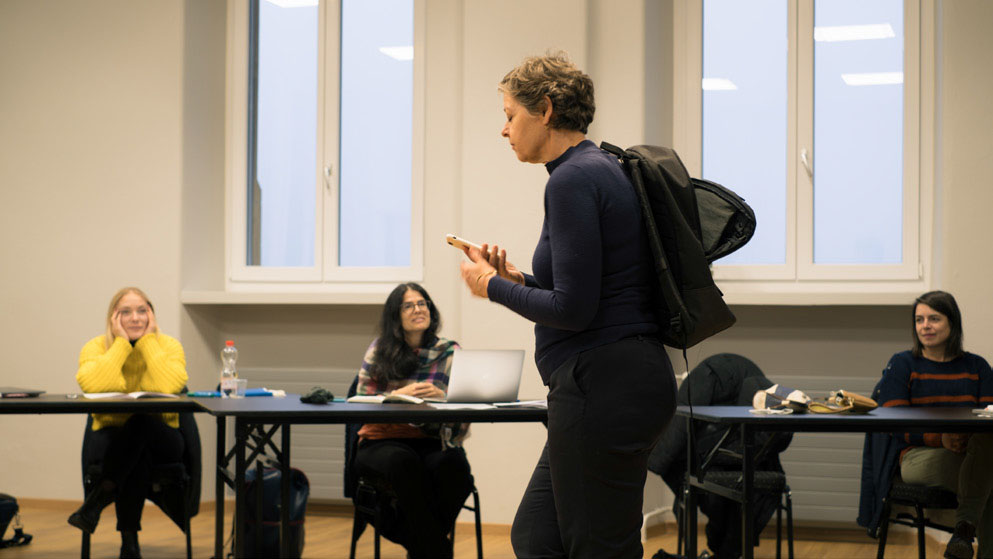
Figure 1:: Photograph of Susan Ossman during a performance exercise. © Sara Wiederkehr.
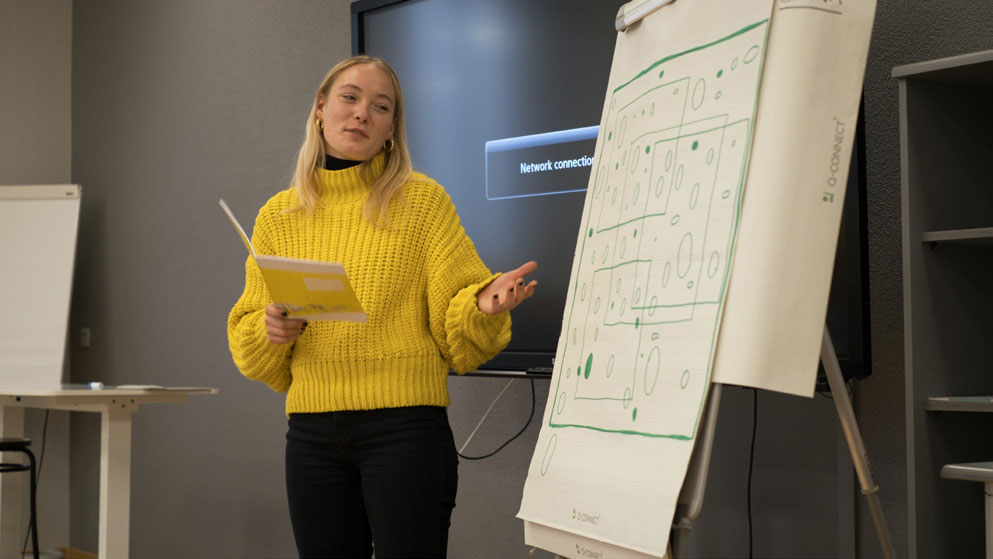
Figure 2:: Photograph of Michelle von Dach during the presentation of another participant’s visual interpretation of her research. © Sara Wiederkehr.
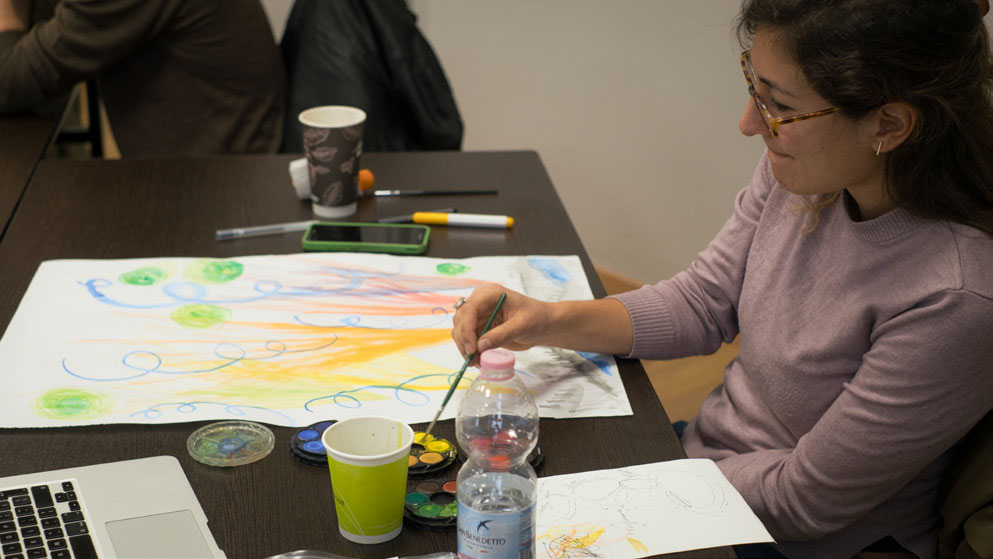
Figure 3:: Photograph of Nina Khamsky during visualisation exercise. © Sara Wiederkehr.
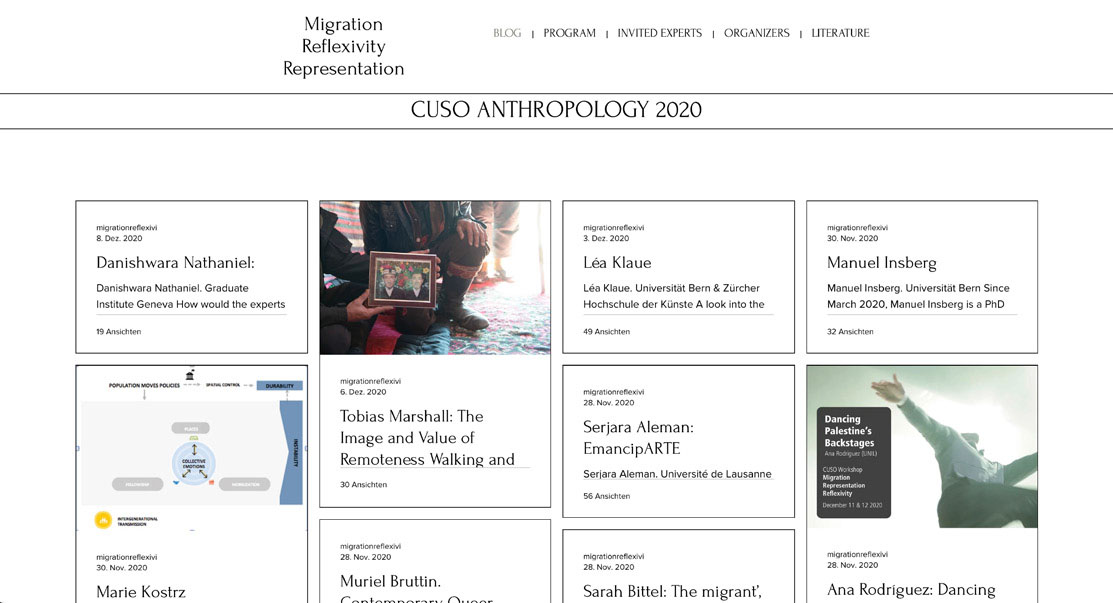
Figure 4:: Screenshot of the blog we created to accompany the workshop. © Serjara Aleman, Federica Moretti, Sara Wiederkehr.
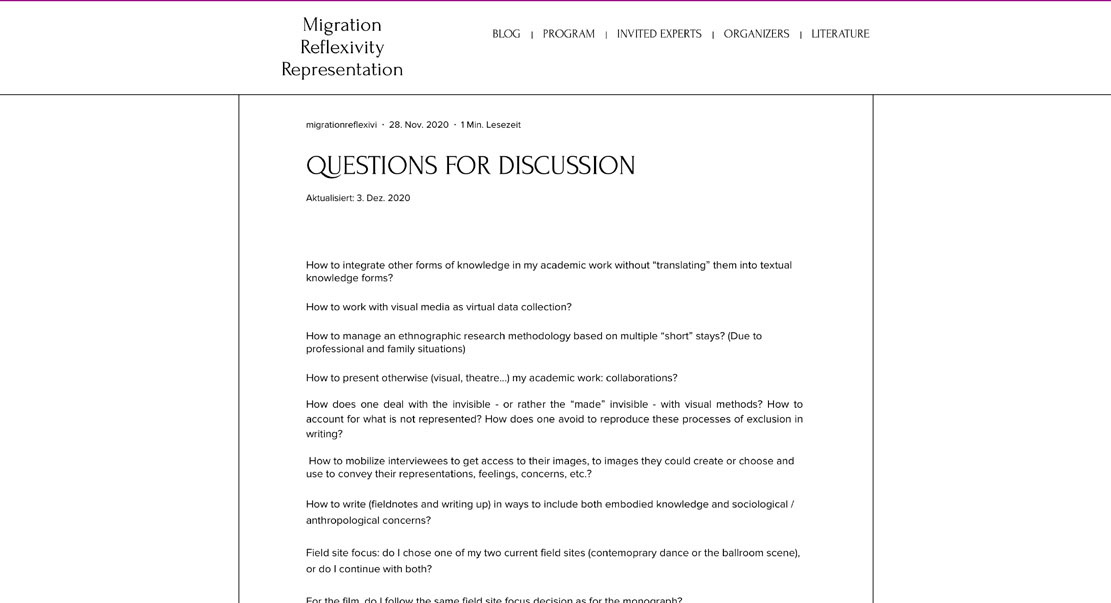
Figure 5:: Screenshot of the blog page where we collected the participants’ questions in preparation of the workshop. © Serjara Aleman, Federica Moretti, Sara Wiederkehr.
The module created a space for graduate students to confront theoretical ideas, methodological issues, and epistemological critiques addressed in anthropological literature in light of their own research experiences. We wanted to be able to ask questions openly and confront the problems that arise from the gap between theory and practice and the difficulty in overcoming them, such as methodological or ethical concerns—best practice of collaboration, engaged or public anthropology, deconstructing the concepts we are used to work with to avoid the pitfalls of misrepresenting research participants or relations, or imposing epistemic violence.
The first contribution, “Échapper au jeu de la represéntation” by Claudia Howald, presents, through a dance at night in the desert, the author’s critical reflection on the role of the researcher in (re)producing and (de)constructing people and places of the research. Working with youth collectives in Quibdó, the capital city of the Chocó Department in the Pacific region of Colombia, Howald reflects on the refusal of young people to engage in the jeu de représentation (representational game) by defying the image imposed on them. Power imbalances also characterize her research and become manifest in the suspicion of the youth she is working with of the possibility that she, as a white woman, mother, academic, employee, and Swiss national, reproduces asymmetries and stigmas with her work.
The second contribution, “Les paradoxes de la suspicion: réflexions autour d’une ethnographie numérique des ‘paradoxes des permis F’ parmi des jeunes Afghan.ne.s en Suisse” by Nina Khamsy, discusses the role of smartphones in the field and the digital social ties they can foster. She also proposes ethical reflections regarding collecting and publishing the results of her research, made complex by the digital. She addresses these power relations in the field and possible forms of collaboration as epistemological triggers.
The third contribution, “Violences de masse, autocensure et web diasporique: quand l’enquête de terrain nous confronte à la question du positionnement en ligne” by Léo Maillet, critically reflects on different forms of representation in relation to the digital world: the researcher, the research participants, the subject of study. In a profoundly reflexive piece, Léo shows how a potentially compromising event in the field can become a chance to situate oneself vis-à-vis one’s interlocutors and change/counter present exogenous representations of the researcher.
Finally, the editors of this issue present a conversation with the invited colleagues Susan Ossman, Eda Elif Tibet, and Nadine Wanono. Here, different academic traditions and personal backgrounds nuance the understanding of anthropology as a monolithic practice and reflect on the relationship between migration and representation, drawing from specific experiences in digital media, affective multimodalities, and performance. The dialogue shows how research can be taught creatively and change according to its moment and place.
This exchange also highlights the importance of sharing and creating spaces where anthropological practice is invited to go beyond its self-imposed limits. In addition to the written excert, the podcast of the interview can be accessed via the QR code.

Figure 6:: Code to access podcast of the interviews.
These contributions are framed by a foreword by the coordinator of the CUSO Program in Anthropology, Esther Leemann, and an afterword by our supervisor Monika Salzbrunn. The former sheds light on the current debates about higher education in Anthropology in Switzerland and their importance in developing the discipline, while the latter reflects on innovative teaching experiences involving multimodal research methods.
With the desire to valorize the pluri-linguistic exchanges and the diversity of research languages, the contributions are in English, French and German. The CUSO module brought together graduate students from the universities of Geneva, Neuchâtel, Fribourg, Lausanne, Bern, Lucerne, and Zurich, working in Asia, Europe, and the Americas. This feature presents the contributions of the participants who wanted to engage in this reflexive practice.
Authors
Serjara Aleman successfully defended her PhD at the University of Lausanne and was a grantee of the Swiss National Science Foundation (doc.ch program). In her thesis, she explores critical cultural work in Lima, Peru and proposes relational filmmaking as a decolonial multimodal research practice. Through long-term audiovisual collaboration, this approach moves beyond extraction and encourages shared knowledge-making rooted in engagement and negotiation foregrounding the ethical and political stakes of the discipline. She is a researcher at the Centre intercantonal d’information sur les croyances (CIC) in Geneva and at the HES-SO University of Applied Sciences and Arts Western Switzerland of Social Work in Fribourg.
serjara.aleman@hefr.ch
Centre intercantonal d’information sur les croyances (CIC), Geneva/HES-SO University of Applied Sciences and Arts Western Switzerland of Social Work, Fribourg
Federica Moretti is an anthropologist. She obtained her PhD from the University of Lausanne, as part of the ERC-ARTIVISM project. She has been a researcher and lecturer in the ERC-SOCIOBORD project at the European University Institute and at the Laboratoire d’Anthropologie des Mondes Contemporains of the Free University Brussels (ULB). She is an affiliated researcher at the Institut des sciences sociales des religions (ISSR) at the University of Lausanne and at Department of Social and Cultural Anthropology at the KU Leuven. Passionate about tackling ethical questions in research, she is an active member of the Commission de réflexion éthique et déontologique (CRED) of the Swiss Anthropological Association.
federica.moretti@unil.ch
University of Lausanne/KU Leuven
Sara Wiederkehr is a PhD candidate in Anthropology at the University of Lausanne. In her thesis, she analyses the role of street art and social imaginaries in the construction of space and place in Los Angeles, California, by following the performativity of street art and its capability of creating belonging and reshaping urban space. She is a member of the Commission d’Anthropologie Visuelle of the Swiss Anthropological Association.
sara.wiederkehr@unil.ch
University of Lausanne