Naming Semonpiru. Masculinities Beyond the Norm in Bolivian Guaraní Everyday Life
https://orcid.org/0009-0000-6144-3399
This article presents an ethnographic and narrative portrait of Semonpiru, a middle-aged Bolivian Guaraní man who challenges social norms in various aspects of his life, including his sexuality and performance of masculinity. Drawing on over a decade of ethnographic research and a long-term relationship with Semonpiru, and from a reflexive positionality, the article examines non-normative masculinities, naming practices, and gender categories in everyday life among Bolivian Guaraní communities. Focusing on the local category kuña-kuña (“woman-woman”), applied to men perceived as insufficiently masculine, it shows the ways in which Guaraní gender norms shape social life and how Semonpiru’s singular subjectivity intersects with categorizations and the normative gaze of his social milieu, thus highlighting the ambivalent balance between regulating deviance and acknowledging its existence on their own terms.
I had never seen Doña Marcela1 laugh so much or so loudly. The usual shyness and discretion she displayed in my presence, much like that of most Guaraní women when interacting with me, vanished when Doña Marcela brought up a Guaraní term in our conversation: kuñakuña, “woman-woman.” I had never heard it before. Her hilarity came from using an expression that emphasizes femininity by doubling the word “woman” (kuña) to refer, in fact, to a man, Semonpiru, a middle-aged Guaraní man I have worked with for over a decade, wellknown in the region for his knowledge and activism in favor of Guaraní culture—and for being one of the few who still craft traditional wood masks.
Semonpiru was born and still lives in a nearby Guaraní community across the wide river flowing through this area of the Bolivian Chaco, in the southeast of the country, a region both materially relegated and symbolically constructed as peripheral. Our conversation turned to him because I had recently spent a few days in his company, just before crossing the river—a sandy bed in the dry season—to reach Yeroviati, another Guaraní rural community across the river, where Marcela and her husband, Justino, welcomed me into their home.
Marcela and Justino hosted me in Yeroviati since my first visit in 2012, during my first fieldwork experience in Bolivia as a still young anthropology student eager to understand how the political transformations sparked by Bolivia’s 2009 “refoundation” as a Plurinational State (Schavelzon 2012) were experienced in everyday life. This led me to the Bolivian Chaco, where the Guaraní were using the new plurinational framework to build their own political project, a new Indigenous autonomy (Morell 2021). By changing the governance system, the Guaraní project also aimed to contest the hegemony still held by the white-Creole population, known as karai by the Guaraní, rooted in the region’s 19th-century colonization. Justino and Semonpiru were players in this process, serving as communal elected representatives in the Assembly that shaped the new autonomy.
What began in 2012 as a simple master’s thesis grew into a much more extensive doctoral dissertation as I became captivated, even absorbed, by Guaraní politics and Chaco’s complexity. This led to several months of fieldwork and several trips back to Yeroviati, always staying with Marcela, Justino, and their family, which has been growing over the years from three children to several grandchildren. On more recent visits, I returned as a postdoctoral researcher engaged in two consecutive but distinct projects. The first deepened my previous research on Indigenous self-determination, taking me back once again to the field in 2019, while the second marked a significant thematic shift, bringing me back to the same field site in 2023 and 2025, but this time to explore the intersections of sexual-gender diversities and indigeneity2. While stimulating, I must admit that this shift—arising less from my own research trajectory and more from the uncertain, often precarious twists of the postdoctoral world—is both challenging and unsettling, as it requires me to critically revisit not only my positionalities in the fieldwork, but also my own subjectivity as a cis-hetero white man.
But it was before my new research topic compelled me to rethink many things that, in 2019, on a chilly winter evening, I first encountered the term kuña-kuña, amidst Doña Marcela’s resounding laughter, which soon spread to her husband Justino. A fire burned on the earthen floor of the kitchen; a fragile, makeshift structure made of mud with a metal roof. Outside, the icy winds from the Antarctic, the surazo, had plunged the temperature in one of South America’s warmest regions. The fire could barely shield us from the cold. Before leaving for Yeroviati, after spending a few nights at Semonpiru’s house, I gave him my sleeping bag. I thought he would need it more than I did, as earlier that same year, he had moved to a different area of his community, deeper in the forest, away from where most of the houses were located. Semonpiru had given a name to his new solitary home, “Land without Evil,” which is also his life project —“my message,” he told me.
Ivi Maraëi, Land Without Evil, evokes the call of ancient Tupi-Guaraní prophets to set out in
search of a terrestrial paradise of abundance and delights in a new land “free from
evil” (Clastres 1975). This myth, rooted in traditional Guaraní religiosity, has been used to explain
the historical migrations and territorial expansion of Guaraní-speaking groups across
South America (e. g., Métraux 1928), though this interpretation is subject to an increasing discussion (Villar and Combès 2013) (Figure 1). 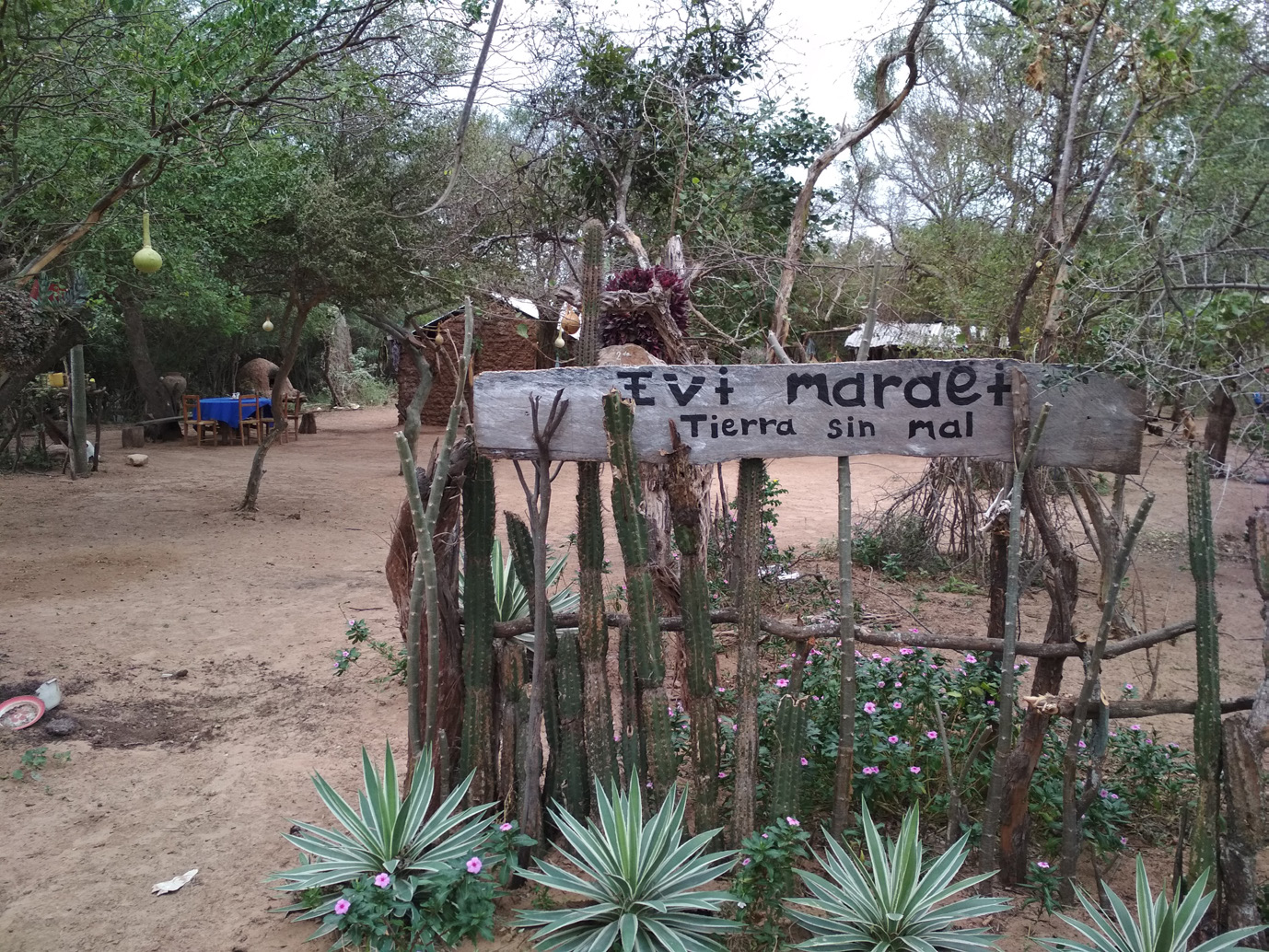
Figure 1: Semonpiru’s Ivi Maraëi in 2019. © Morell.
At the entrance to the yard of his new home hung a wooden sign where Semonpiru had elegantly inscribed Ivi Maraëi – Tierra sin Mal. The sign was held up by carapari cactus branches that he had arranged in a line to build a modest yet refined garden, where pink flowers pose a delicate contrast to the Chaco’s thorny vegetation. Semonpiru had prioritized the decoration of the surroundings over other, seemingly more functional concerns, leaving the house where we slept still unfinished. By early morning, the surazo winds swept through the earthen walls, rattling the metal roof. The following night in Yeroviati, as I lay awake trying to sleep without my sleeping bag, I thought that at least Semonpiru wouldn’t feel cold in his new, in 2019 still-under-construction, land without evil.
When I told Marcela and Justino about Semonpiru’s new home, they were surprised, mixing pity with admiration, that kuña-kuña was able to live there, “in the middle of the forest,” and moreover alone, with no one to care for him. Marcela burst into laughter again when I told that it was Semonpiru who had been preparing meals during my visit, exactly what she does when I visit Yeroviati —what kuña are expected to do, whether during occasional visits or in their daily work-care for their families. Neither Justino nor Marcela understood why Semonpiru hadn’t bothered to extend the power grid to his new house, giving up the electricity that had recently reached his community, while those on the other side, like Yeroviati, remain in dark to this day.
Semonpiru’s solitude, emphasized by the isolation of his Ivi Maraëi from the community and its modest advancements, contrasts with the prevailing residential patterns, typically centered on heterosexual nuclear families and structured by a rigid gendered division of labor. However, Semonpiru’s loneliness is relative. Among the chickens and goats, he is accompanied by Dulce, “Sweet”, his dog. He treats her tenderly, unlike the shouting and beating that other dogs endure from their keepers. Semonpiru has chosen to live alone, on his own terms, but not in isolation. His self-sufficiency and knowledges, seen by him as a legacy from the “ancients,” have earned him the respect of his people. Moreover, he shows interest in and hospitality toward those who, like me, come from farther away. In a way, he wants to institutionalize his sense of hospitality by turning Ivi Maraëi into a “tourism- agroecological center” capable of hosting not only foreigners but also young Guaraní people. Under his guidance, they would learn to become self-sufficient, realizing through practice that leaving their communities to earn a living, a pattern that has persisted for decades, is unnecessary.
When he shared his ideas with me in 2019, I couldn’t help but feel that Semonpiru’s
dreams would never come true. Yet, when I came back in 2023, the project had made
remarkable progress. His house was fully constructed. He had also expanded the cultivation
areas and talked with local NGO’s and Guaraní authorities about his plans. Another
wooden sign reading “Ivi Maraëi” hung from a tree above a clay jar that had once belonged
to his grandmother (Figure 2). She had passed on to him the traditional Guaraní weaving
techniques, demonstrating that even men—certain men—could embrace a practice rooted
in femininity.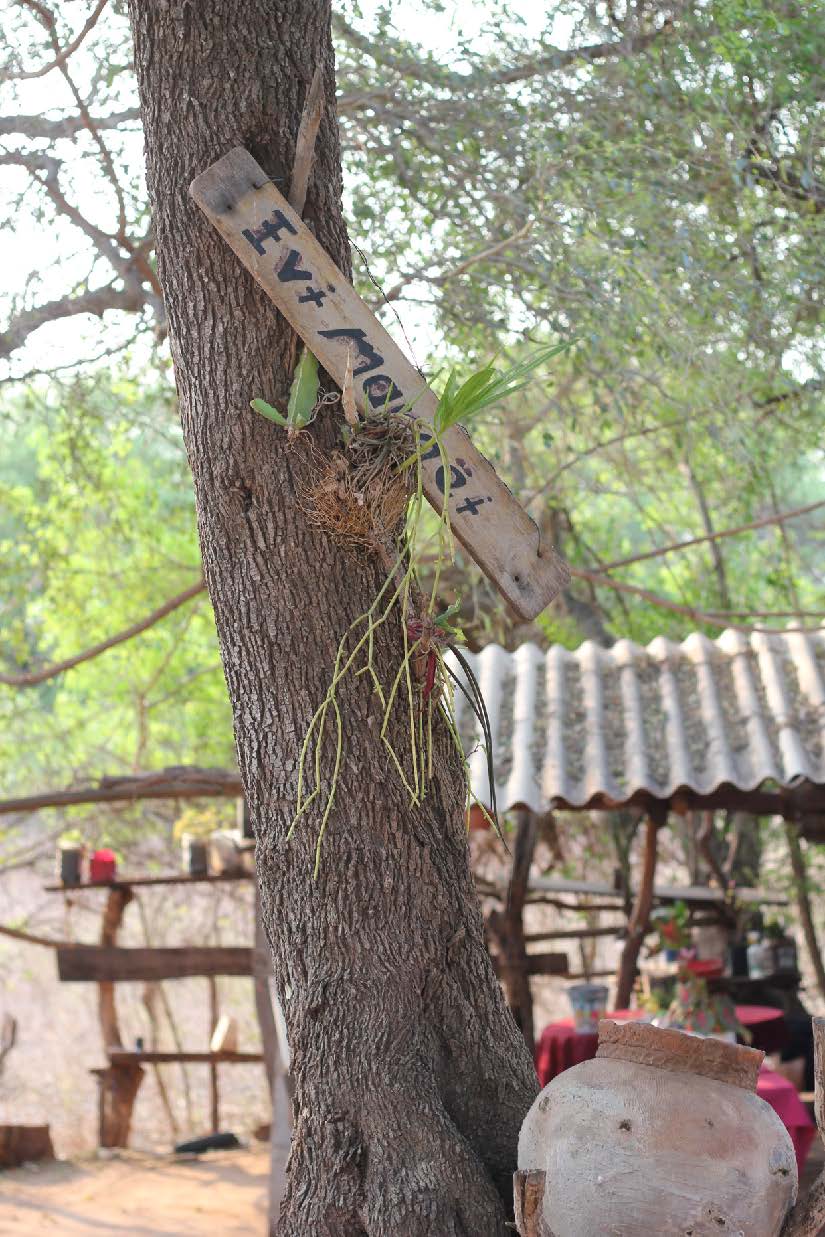
Figure 2: Semonpiru’s Ivi Maraêi in 2023. © Morell.
At first, I thought kuña-kuña was a nickname given to Semonpiru by those around him. I assumed it was how Marcela, Justino, and other Guaraní people referred to him, either because his non-heterosexuality is somewhat public—after all, one of the first things Semonpiru told me when we met was that he also liked men—, or perhaps because his gender expression and way of living embodies a kind of masculinity that deviates from hegemonic position (Connell 2005, 76–81). Both possibilities, presumed “homosexuality” or a performance of masculinity “not masculine enough,” would be sufficient to mark him as effeminate, and thus kuña-kuña.
In any case, it is common among the Guaraní to give each other nicknames, often in Guaraní. These monikers usually have a sarcastic tone, linked to some unflattering aspect of the person’s appearance, character, or biography. An example: a well-known Guaraní activist was called kuchipunga, “pig face,” a not-so-respectful moniker that, nonetheless, did not prevent the person who bore it from being highly respected by Guaraní people as a whole—who, nevertheless, persisted to call him kuchipunga. While softened by a touch of burlesque humor, contemporary Guaraní nicknames still carry echoes of the distinctive personal names of their ancestors from a time before colonization, which intensified under the newly formed Bolivian Republic and profoundly reshaped a society that had largely remained outside the full grasp of the Spanish colonial order (Saignes 2007). Alongside the violent process of territorial dispossession, the Guaraní’s incorporation into Bolivian statehood entailed a symbolic dispossession that deeply permeated their subjectivity, leaving its mark on something as intimate as personal names.
Like the majority of present-day Guaraní, Semonpiru carries a karai name reflecting the new “onomastic regime” (Richard 2015) gradually spreading across the region as karai presence increased. On my 2023 visit, I suggested he could choose a new name, a pseudonym to protect his anonymity, as my new research had shifted our conversations in other directions, more intimate and sensitive—also more uncomfortable for both of us, or at least certainly for me. Semonpiru agreed to be part of my new research, but not my pseudonym proposal: Carlos, Carlitos. Though aligned with the common stock of Spanish-language names in the region, he found it “too vulgar.”
The alternative he proposed, Ndereka Semonpiru (simplified here as Semonpiru), clearly departed from karai-sounding names and vulgarity: both in its evocative meaning—“I’m thin from missing you”—and in its origin. He told me that this name had been given to him years ago by an ipaye, a shaman, during a community party “like the ones we used to have before,” accompanied by abundant fermented maize, where collective dances to the circular rhythm of flutes and tambourines could last for days.
In addition to revealing something about Semonpiru’s subjectivity, one embodying emotions and vulnerability, the choice (or revelation) of this name also suggests that, beyond burlesque nicknames, some Guaraní names still circulate on their own terms. Much like the sacred or secret indigenous onomastic traditions found across different South American regions (e.g., Erikson 1999; Villar and Bossert 2004), these naming practices operate outside the homogenous and rigid logic of karai onomastics. By revealing this name, even perhaps only to me and potential readers, Semonpiru is in some way rebelling against the colonial legacy that erased the social identity embedded in Guaraní personal names. Moreover, through this singular name, Semonpiru would also be asserting his true subjectivity in opposition to another name applied to him by his own people, kuña-kuña, which, even affectionately, reminds him that he is not “man enough.”
As I mentioned earlier, in 2019, I wasn’t yet researching sexual diversities. Although I had known from the beginning that Semonpiru was not heterosexual (my 2014 field diaries include a note where I categorized him as “bisexual”), I wouldn’t have labelled him “queer;” and I’m still unsure I would, even after three years involved in a project exploring the connections between this concept and indigeneity. Nevertheless, the appearance of the term kuña-kuña in 2019 sparked an unusual conversation with my hosts in Yeroviati about queerness, as the fire crackled on the kitchen floor.
I would soon learn that Semonpiru wasn’t the only kuña-kuña. More than just a personal nickname, the term functions as a generic Guaraní expression for men perceived as non-heterosexual or effeminate, whose manhood was under suspicion. They transgress the norms of—and at the same time remain subordinated to—“hegemonic masculinity” (Connell 2005, 76–81) making them susceptible to being labeled through its hierarchically inferior opposite: femininity. Spontaneously, Justino began listing other kuña-kuña from nearby communities, while Marcela, amused, nodded and even suggested other names. I noted in my diary that this was one of the conversations where she participated most enthusiastically. According to Justino’s count, there were various kuña-kuña in the area, but none in Yeroviati: “We’re an evangelical community,” he clarified. Justino questioned the compatibility of being both kuña-kuña and evangelical, as Semonpiru indeed is, having recently joined an evangelical church —at Ivi Maraëi, wooden signs with Bible verses hung from some trees.
I asked Justino, partly to provoke him, whether they would have hosted me if I had been kuña-kuña. What would have happened if, when I brought my partner to visit, they had discovered she was a man? Marcela laughs again, while Justino gives a firm “no,” citing biblical prohibitions. However, as I pointed out to Justino, based on what he had just explained to me, they share their daily life with other presumed kuña-kuña. In fact, they are fond of Semonpiru. “There’s no problem if they don’t bother. Semonpiru only bothers sometimes, if he drinks.”
Although the conversation —progressively turned into an argument— continued, I don’t remember exactly how it ended. I remember showing them photos from a friend’s gay wedding I had recently attended, insisting that love transcends the gender of the loved one. “We’ll never let this happen in Bolivia!” I do remember being disturbed by Justino’s stance, which, alongside the specific evangelical intransigence, reproduces a deeply ingrained homophobia that permeates various layers of Bolivian society. This heteropatriarchal normativity defines the social position of those who deviate from it. In this sense, terms like kuña-kuña might function as a category that regulates deviation and reinforces normativity.
However, there is a certain ambivalence: although the term categorizes deviant subjectivities, it simultaneously allows for a (limited) recognition of those who live outside the norm—a way of existing in their difference, in Guaraní terms. Certainly, this possibility occurs within a hierarchical and rigid binary gender scheme, far from the more fluid or “third gender” spaces existing in some Amerindian societies (e. g., Mirandé 2017), an expansive gender configuration that is absent in the contemporary Bolivian Guaraní world and not explicitly reflected in historical sources.
Yet despite Justino’s homophobic stance, I didn’t feel the weight of stigma or cruelty in the way he spoke about the kuña-kuña, nor, even less, in Marcela’s laughter; a weight I did clearly perceive in the karai world, where masculinity, whiteness, and power are mutually constitutive (Gustafson 2006). In the Guaraní context, kuña-kuña, even while marking the limits of legitimate masculinity, maintains a playful tone with gender and its ambivalences. In the karai world, however, being called maricón, “faggot,” is not a joke3. It expresses a position of power including but beyond gender. The two categories resonate with each other, as both marks non-hegemonic masculinities, but because they arise from hierarchically opposed positions—where the Guaraní are subordinated—they do not resonate equally for the subjects being categorized. They are not, therefore, equivalent.
“So, have you two… made love?”, Justino asks me mockingly when I tell him I’ve just come from Ivi Maraëi. Marcela gasps in amusement at her husband’s playful provocation. I met the couple for the last time in February 2025, just as I had in 2019 and 2023, each time after spending a few days in Ivi Maraëi with Semonpiru, with whom our relationship had evolved. In 2023, the taboo weighed on our conversations—probably more on my side than Semonpiru’s—and I even hesitated to ask if I could write openly about his sexuality, doing so only at the very end of my visit, when the name Semonpiru came up. By the time of my last visit in 2025, however, the taboo had begun to crack. Through its fissures emerged frank conversations, several hours of recordings recounting his life story (material I am working on for a longer publication) as well as reflections on how others see and name him. He is fully aware that he is called—and regarded— as kuña-kuña, which he translated simply as “gay.” He doesn’t feel recognized; he does not consider himself gay, rather bisexual, but it doesn’t seem to bother him much. “Me, I am multiple: I must know how to do what a man does and what a woman does,” he repeated several times, asserting his singular multipleness within the gender system, while also accepting its rigid and binary structure as natural.
Marcela hands me an old plastic chair and steps aside to prepare mate over a fire lit on the ground. Unlike previous visits, this last meeting will not take place in Yeroviati. A few months earlier, she and Justino had left their community to settle in a small karai town that serves as the administrative center of the area, a town founded at the end of the 19th century, like most karai towns in the Chaco, as part of the process of consolidating the colonization of Guaraní territory. Marcela and Justino have settled, rather precariously, in an old, half-abandoned building on the outskirts of the karai town, which Justino calls the “former church boarding house.” “We’re somewhat uncomfortable here,” he says, “there isn’t even a cot, but we have to make sacrifices.” They moved to the karai town to be close to and support their eldest daughter during the final years of her studies at the local rural teachers’ training school. Justino will stay in the town, while Marcela will travel back and forth to Yeroviati, where their second daughter and several grandchildren remain, extending her care work in the community to include her family in town as well.
Since I wrote the first version of this article just before leaving for my last trip to Bolivia, I can’t resist responding to Justino’s slightly cheeky joke by bringing up once more the Guaraní term that made Marcela laugh so much in 2019. “No, of course we didn’t make love,” I tell Justino, trying to construct this final phrase in Guaraní: “I am not kuña-kuña.” Marcela bursts out laughing again.
Chamorro, Graciela. 2009. Decir el cuerpo: Historia y etnografía del cuerpo en los pueblos Guaraní (Diccionario etnográfico histórico del guaraní, tomo 1). Asunción: Tiempo de Historia, Fondec, UFGD.
Clastres, Hélène. 1975. La Terre sans Mal: Le prophétisme tupi-guarani. Paris: éditions du Seuil.
Connell, R. W. 2005. Masculinities. Berkeley: University of California Press.
Erikson, Philippe. 1999. El sello de los antepasados. Marcado del cuerpo y demarcación étnica entre los matis de la Amazonía. Quito: Abya-Yala, IFEA.
Gustafson, Bret. 2006. “Spectacles of Autonomy and Crisis: Or, What Bulls and Beauty Queens have to do with Regionalism in Eastern Bolivia.” Journal of Latin American Anthropology 11 (2): 351–79. https://doi.org/10.1525/jlca.2006.11.2.351.
Métraux, Alfred. 1928. “Les migrations historiques des tribus tupi-guarani.” Journal de la Société des Américanistes 20: 1–45.
Mirandé, Alfredo. 2017. Behind the Mask. Gender Hybridity in a Zapotec Community. Tucson: University of Arizona Press.
Morell, Pere. 2021. “Los primeros pasos de Charagua Iyambae, la primera autonomía indígena del Estado plurinacional de Bolivia.” Revista d’Estudis Autonòmics i Federals. Journal of Self-Government (REAF-JSG) 34: 113–44. https://doi.org/10.2436/20.8080.01.70.
Richard, Nicolas. 2015. “Nombre propio, trabajo y reproducción social en el Chaco boreal contemporáneo.” In Capitalismo en las selvas: enclaves industriales en el Chaco y Amazonía indígenas (1850–1950), edited by Lorena Córdoba, Federico Bossert, Nicolas Richard. 183–204. San Pedro de Atacama: Ediciones del Desierto.
Saignes, Thierry. 2007. Historia del pueblo chiriguano. La Paz: IFEA.
Schavelzon, Salvador. 2012. El nacimiento del Estado Plurinacional de Bolivia. Etnografía de una Asamblea Constituyente. La Paz: ClACSO, Plural, CEJIS, IWGIA.
Villar, Diego, and Federico Bossert. 2004. “La onomástica chané en clave etnográfica y comparativa.” ACTA AMERICANA 12 (1): 49–75.
Villar, Diego, and Isabelle Combès. 2013. “La Tierra Sin Mal. Leyenda de la creación y destrucción de un mito.” Tellus, año, 13 (24): 201–25.
Pere Morell i Torra holds a Ph. D. in anthropology from the University of Barcelona. Through political anthropology, he has worked on struggles for hegemony and autonomy in the Bolivian Chaco, focusing on the Guaraní people. From 2022 to 2025, he worked as a postdoctoral researcher at the Haute école de travail social in Geneva, within the collaborative research project funded by the Swiss National Science Foundation, “Queer and Indigenous (Dis)Encounters: Exploring Multiple Gender and Sexual Indigenous Identities in Plurinational Bolivia.” Morell i Torra coordinated the team of the project and conducted his own research on masculinities, power, and racialization in the Bolivian Chaco.
p.morelltorra@gmail.com
HES-SO – University of Applied Sciences and Arts Western Switzerland
All personal and location names have been replaced with pseudonyms, chosen by me, except for Semonpiru, who proposed his own nickname.⬑
I conducted the research between 2022 and 2025 within the framework of the SNSF-funded collaborative project, “Queer and Indigenous (Dis)Encounters in Plurinational Bolivia.”⬑
Among derogatory terms used by karai for perceived homosexuals is the Guaraní word tevi (“buttocks”), recorded by Jesuit Fray Ruiz de Montoya in 1639 as associated with what he called “sodomites” (Chamorro 2009, 226–7). Although Guaraní in origin, I have only heard it used by karai men in a derogatory sense.⬑